Your Cart
Loading
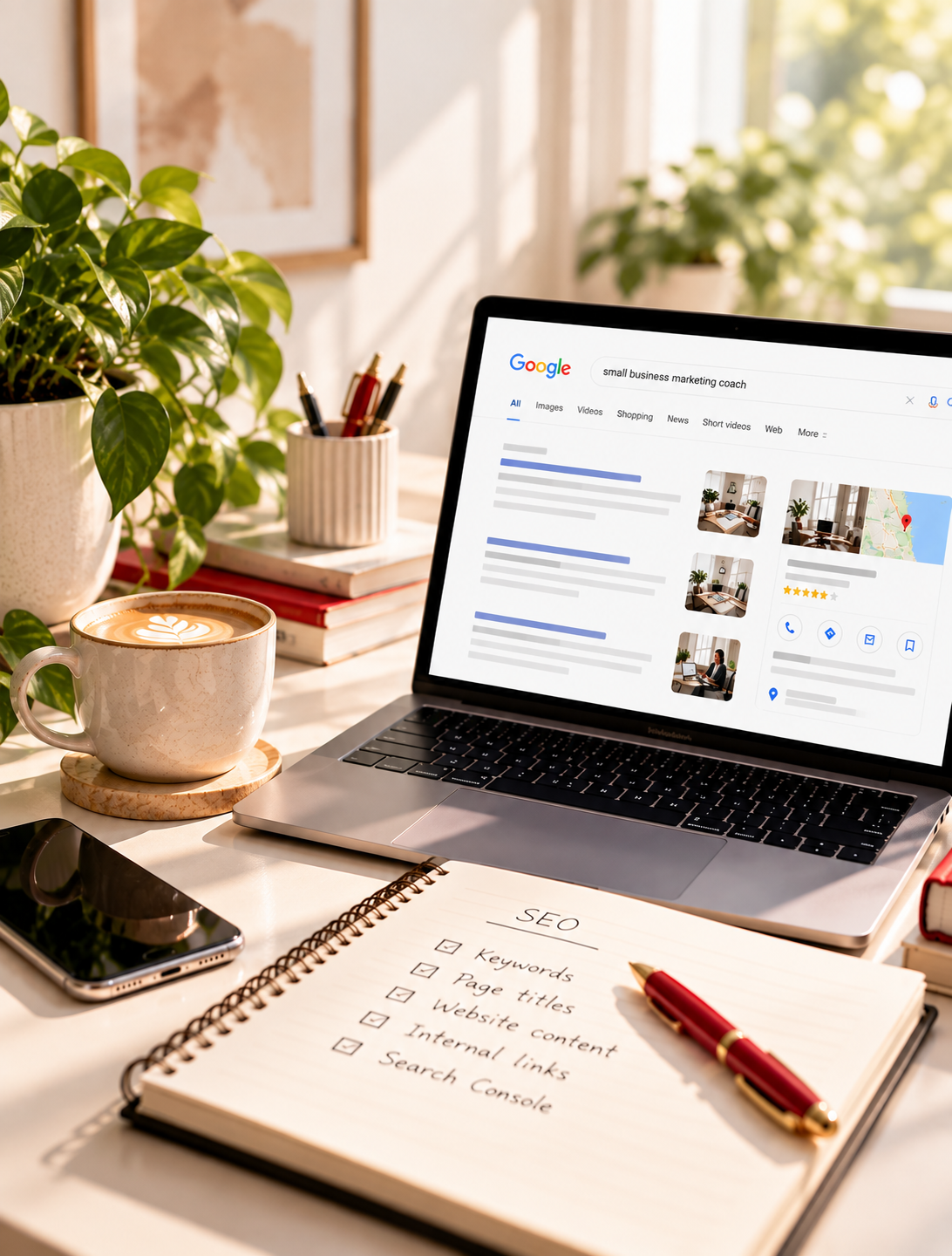
Small business SEO and search visibility workspace showing Google search on a laptop with notebook, coffee and planning tools.

SEO & Search Visibility for Small Business | Rachel Borscz

Make your business easier to find on Google and other search engines with practical, beginner-friendly SEO guidance designed for small business owners.


Learn what your customers are searching for, how search engines interpret your website, and which visibility gaps to fix first.


Written by Rachel Borscz, Online Visibility Coach & Educator | Diploma of Social Media & Marketing | Certificate IV in Training and Assessment


Good SEO should make your business clearer - not make marketing more complicated.

Explore Online Visibility Resources →

You Can Have a Great Business and Still Be Hard to Find Online

You can have a professional website, active social media and a genuinely good business - and still struggle to appear when potential customers search for what you offer.


That does not always mean your marketing is failing.


Often, the problem is simpler: search engines and customers don't get enough clear information to understand what each page is about, who it is for, or why it should appear for a particular search.


Small SEO gaps can quietly add up - unclear page titles, weak website structure, missing internal links, content that does not match search intent, or important pages that are difficult for Google to discover.


Good SEO is not about tricking Google. It is about making your business easier to understand, find and use.

WHAT SEO ACTUALLY MEANS

What Is SEO for Small Business?

SEO stands for Search Engine Optimisation.


For a small business, SEO means improving your website and online information so search engines can better understand your business - and potential customers can find the right page when they search.


It is not one trick or one keyword.


Strong SEO comes from making several parts of your website work together.

Clear Page Titles:

Tell search engines and customers what each page is actually about.


Search Intent:

Create content that matches what someone is really trying to find, learn, compare or buy.


Useful Website Content:

Answer real customer questions clearly, accurately and in enough detail to be helpful.


Website Structure:

Organise pages logically so important information is easy to find and navigate.

Internal Links:

Connect related pages so people and search engines can understand how your content fits together.


Google Search Console:

Use real search data to understand indexing, search queries and website performance.


Clear Business Information:

Keep your services, location, expertise and business details accurate and consistent.


SEO works best when your website is genuinely useful to the people you want to reach.

Why Your Business May Be Hard to Find in Search

  • Your Pages Are Unclear Small business website with vague headings and unclear page structure displayed on a laptop, beside a notebook and red pen, illustrating why unclear pages can limit search visibility.

    Your Pages Are Unclear

    Search engines and customers need to quickly understand what each page is about.

    If your titles, headings or page copy are vague, your website may struggle to appear for relevant searches.

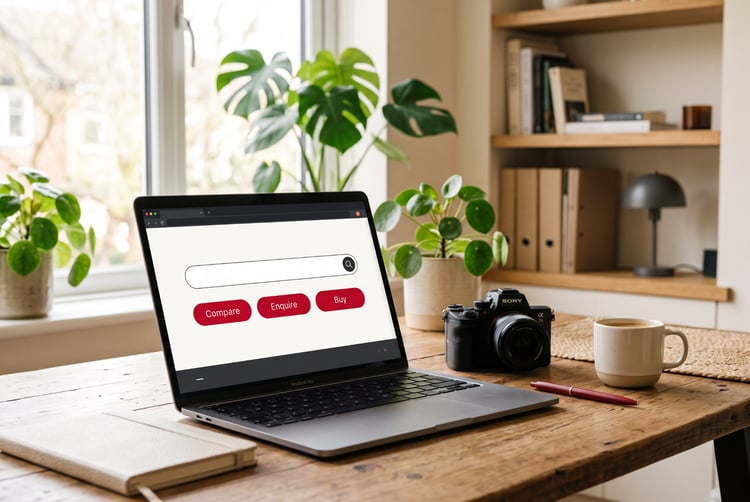
  • Your Content Misses Search Intent Office workspace with a camera and computer showing search options to learn, compare, enquire or buy, illustrating how SEO content should match what a customer is trying to achieve.

    Your Content Misses Search Intent

    Someone searching for information has a different goal from someone ready to compare, enquire or buy.

    SEO works better when your page matches what the person is actually trying to accomplish.

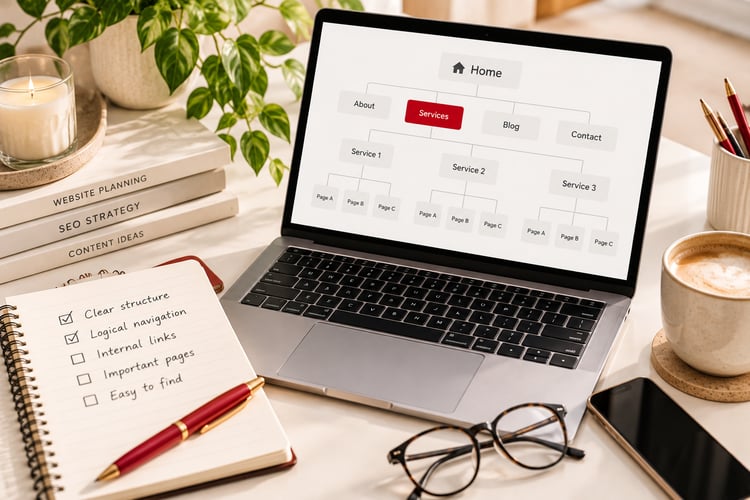
  • Important Pages Are Hard to Discover Laptop displaying a clear website sitemap with connected pages, beside SEO planning notes, illustrating how website structure, navigation and internal links help important content get discovered.

    Important Pages Are Hard to Discover

    Pages that are buried, poorly linked or difficult to navigate may be harder for both visitors and search engines to find.

    A clear website structure helps visitors and search engines discover important content.

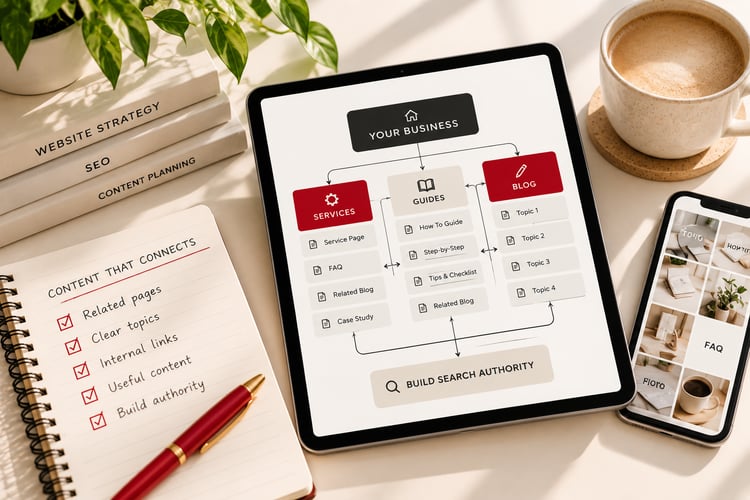
  • Your Content Has No Clear Topic Structure Tablet showing connected services, guides and blog topics leading to search authority, beside content planning notes, illustrating how related pages and internal links build topical SEO authority.

    Your Content Has No Clear Topic Structure

    Publishing individual posts is not the same as building search authority.

    Related pages and articles should connect around clear topics so search engines can better understand what your website is about.

The SEO Foundations That Matter Most: Clear pages, helpful content, logical structure and answers people can actually use.

Search Intent

Know what your customer really wants.

Are they learning, comparing, searching locally or ready to buy? When your page matches the reason behind the search, it's more useful to the visitor and more relevant to Google.

Clear Page Structure

Make every page easy to understand.

Use descriptive titles, headings and sections so visitors and search engines can see what each page is about within seconds.

Useful Content

Answer real questions properly.

Write accurate, original and practical content that helps customers take their next step, not pages written only to include keywords.

Internal Linking

Connect related pages.

Links between your pages help visitors find what they need. They also show search engines how your topics fit together.

Technical Accessibility

Make your important pages easy to reach.

Search engines need to find and index your key pages. Visitors need a website that loads and works well on both mobile and desktop.

Trust & Expertise

Show who's behind the information.

Real authorship, genuine experience, qualifications, reviews and clear business details help people decide whether they can trust you.

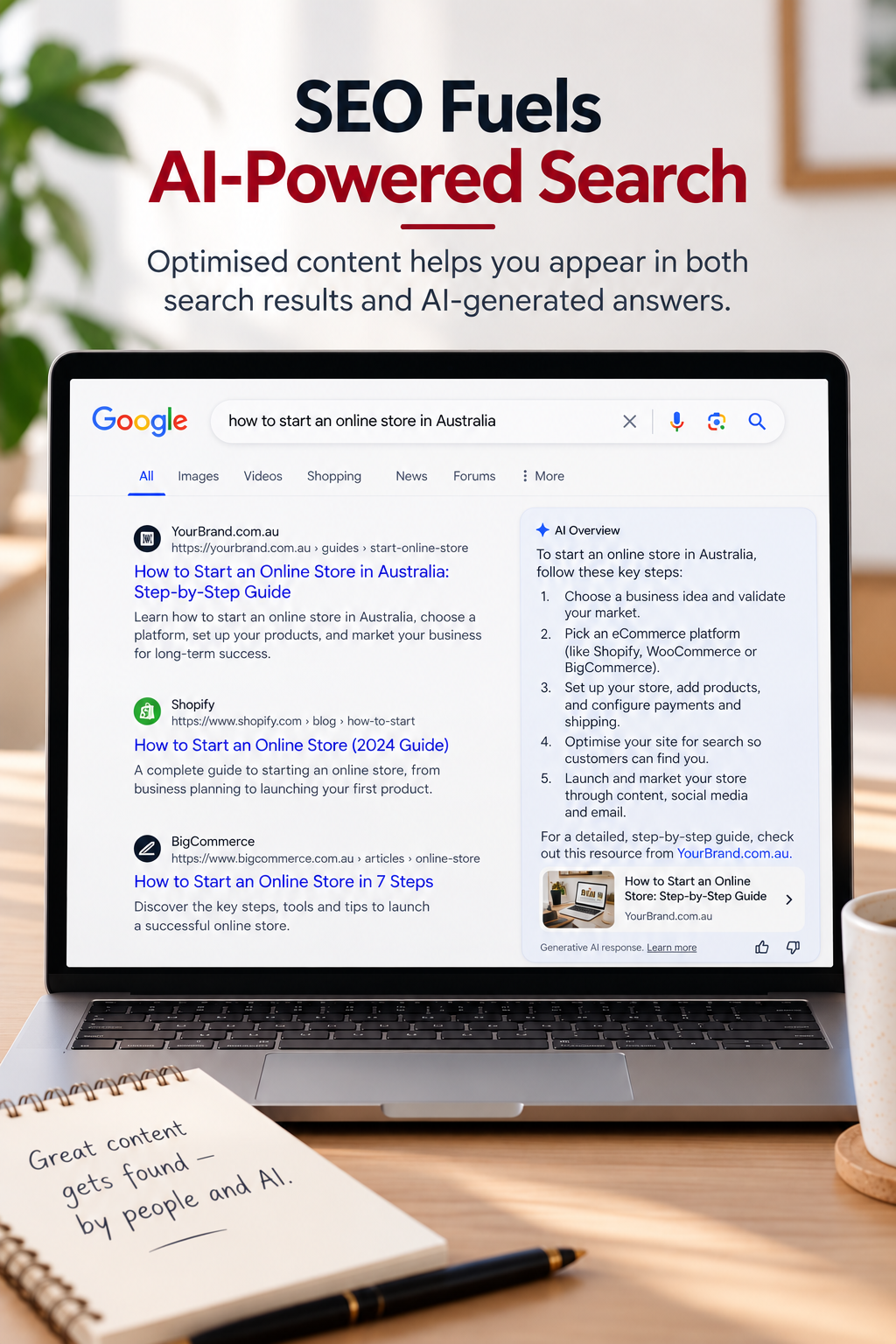
Laptop showing a search results page and an AI-generated answer, representing how SEO supports AI-powered search

SEO Still Matters in AI-Powered Search

AI-powered search is changing how people find information. It hasn't made SEO irrelevant.

Search and AI systems still need clear, useful and accessible information to understand what your business does and when your content is relevant.

The same foundations still matter:

  • helpful, original content
  • clear website structure
  • pages search engines can find and index
  • accurate business information
  • descriptive headings
  • internal links
  • trustworthy supporting information

SEO helps search engines find and understand your content.

GEO and AEO build on that foundation. They make your information easier for AI-powered search and answer tools to interpret and potentially reference.

SEO is the foundation. AI visibility builds on top of it.


Read more: What Is GEO? The New Strategy That Gets Your Business Found in AI Search.

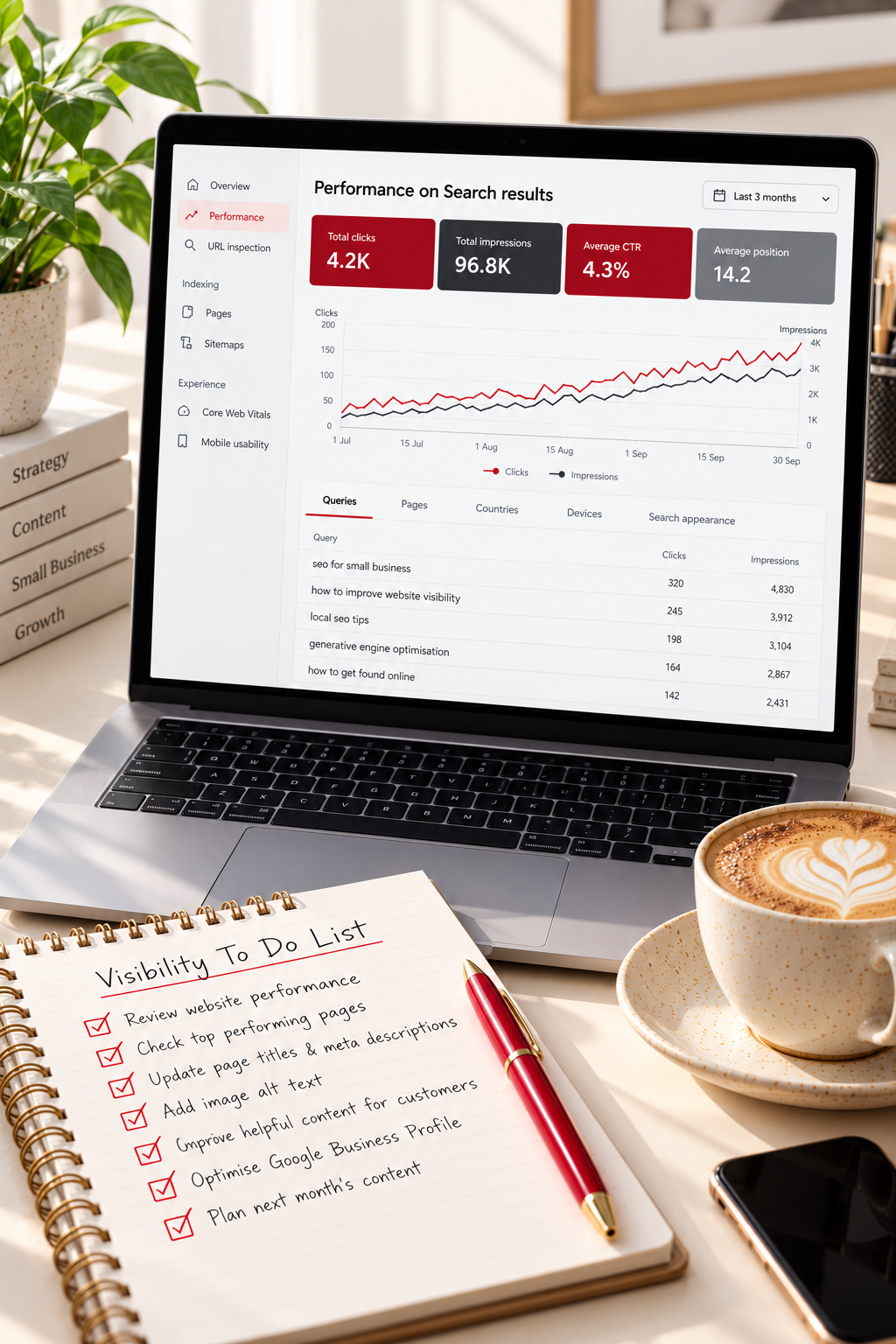
A bright, editorial flat-lay of a laptop on a cream desk beside a spiral notebook with a red pen, a cappuccino and a small plant. The laptop screen shows a website search performance report in the style of Google Search Console's Performance report, on a white interface.

Use Google Search Console to See What Google Sees

You don't have to guess whether Google can find your website.

Google Search Console is a free tool that shows how your site appears in Google Search.

It can help you see:

  • whether your important pages are indexed
  • which searches bring people to your website
  • which pages get impressions and clicks
  • crawling or indexing issues that may need attention
  • how your search performance changes over time

For a small business owner, that matters because it replaces assumptions with real search data.

You can see what Google is already finding, then decide what to improve next.


SEO gets much easier when you stop guessing and start looking at real data.

Start With a Practical SEO Resource


You don't need to rebuild your whole website to improve how you show up in search.

Find the gaps, fix the highest-priority issues first, and build from there.

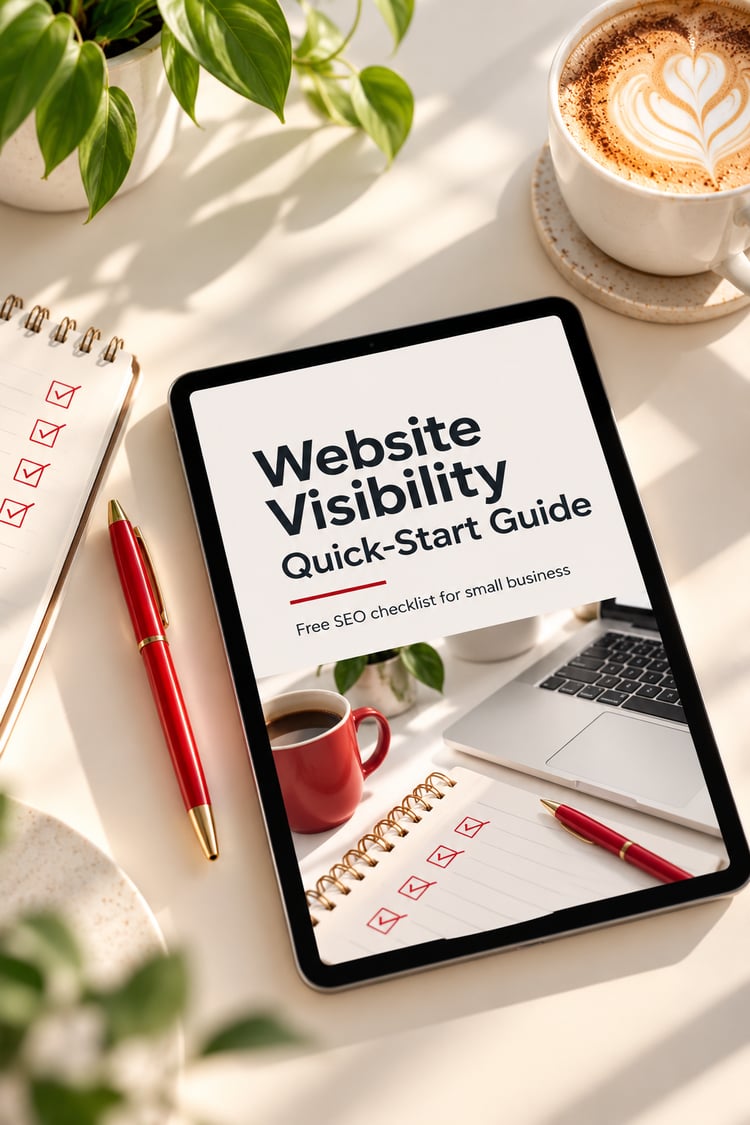
  • A bright, premium editorial flat-lay on a warm cream desk. A single tablet lies at a slight angle, showing a clean PDF guide cover. The cover has a cream background with a bold charcoal headline reading "Website Visibility Quick-Start Guide", a thin red underline beneath it, and a small line reading "Free SEO checklist for small business".

    Website Visibility Quick-Start Guide

    Check the SEO basics that help search engines and customers understand your website.

    The guide walks you through practical checks, including:

    • page titles and search listings
    • website clarity
    • image ALT text
    • Google Search Console
    • clear business information
    • SEO and AI visibility foundations
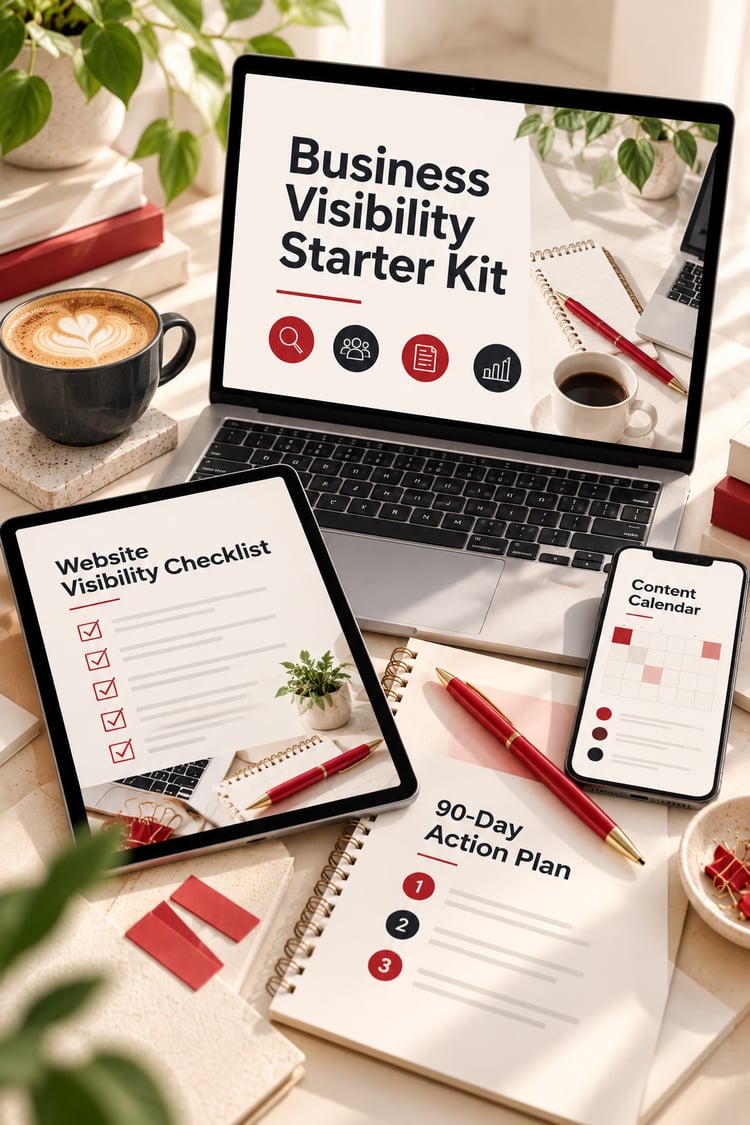
  • A bright, premium editorial flat-lay on a warm cream desk showing a complete digital toolkit. A laptop in the centre displays a clean workbook page, with a tablet at an angle beside it showing a checklist, and a phone showing a simple social media content calendar.

    Business Visibility Starter Kit

    Ready to go beyond your website?

    The Business Visibility Starter Kit helps you strengthen the wider foundations across your website, Google presence, social media and AI-powered discovery.

    Designed for business owners who want a clear, practical starting point, without the overwhelm.

    Inside, you'll work through:

    • website clarity and search basics
    • your Google presence and business information
    • content that's easier for people to understand and share

    A stronger foundation for being found and trusted online.

Frequently Asked Questions About SEO for Small Business

What is SEO for small business?

SEO, or search engine optimisation, helps search engines and potential customers understand your website. For small businesses, this includes useful content, clear page titles, search intent, internal links, website structure and making important pages easy to find and index.

How long does SEO take to work?

SEO is usually a long-term process, not an instant result. Some improvements may be noticed relatively quickly, while stronger search visibility can take weeks or months, depending on competition, website history and content quality.

Do I need SEO if I already use social media?

Yes. Social media helps you stay visible and build relationships. SEO helps people find your business when they're actively searching for information, products or services. They work best together.

What is search intent?

Search intent is the reason behind a search. Someone may want to learn something, compare options, find a local business or make a purchase. Good SEO content matches the page to what the person is actually trying to achieve.

Does SEO help with AI search?

SEO provides important foundations for AI-powered search. Clear, accessible and useful website information makes it easier for search and AI systems to understand your business. However, no SEO or GEO strategy can guarantee that an AI system will mention or recommend a particular business.

Do small businesses need Google Search Console?

It's highly useful for any small business with a website. Google Search Console is free and shows whether Google can find and index your pages, which searches bring people to your site, and whether technical issues may be affecting your visibility.

Can I do basic SEO myself?

Yes. Many SEO foundations can be managed without advanced technical knowledge. Start with clear page titles, useful content, logical headings, internal links, accurate business information and Google Search Console. More complex technical issues may need specialist support.

What is the difference between SEO, GEO and AEO?

SEO improves visibility in search engines. GEO, or Generative Engine Optimisation, helps AI-powered systems understand and potentially reference your information. AEO, or Answer Engine Optimisation, structures information so it clearly answers questions. GEO and AEO build on SEO rather than replace it.

Make Your Business Easier to Find

You don't need to become an SEO expert.


You need to understand the foundations, find what's getting in the way and improve the parts that matter most.


Start with one clear visibility check and build from there.


Explore Online Visibility Resources →